Crow’s Nest 97: 030226
Exactly What You Need Right Now: More Noise
Hello there everyone, and welcome to issue #97 of Crow’s Nest. Closing in on triple digits here soon. I’m not sure I’ve intentionally shifted to a monthly schedule this year, but maybe this is what that winds up being from here. We’ll see.
And yeah, my country is now at war with Iran. It’s awesome and I totally feel great about that 👍 I don’t have much more to really add about that at this time, but of course to acknowledge that’s occurring as I write this feels important. Hopefully whatever purpose my writing serves to you continues to do so as we enter this next tragic cycle of American imperialism, hubris, and death and destruction.
The contemporary producer Shackleton has spent the past few years following in his most prominent namesake’s spiritual footsteps with a ton of releases exploring the outer realms of spiritual, spooky, and eerie experimental music. His latest record, out on AD 93, is a 2LP platter of dubby, psychedelic bass music. ‘Tribal,’ for all its racial connotations, has never felt more accurate here, as the imagery in my head easily resembles a massive trance-induced dance ceremony under the moonlight and massive bonfires in a forested clearing. I gotta hear this in its urban/contemporary equivalent soon, man.

I tend to go back-and-forth in my opinion on fabric/Houndstooth: somewhere between right up my alley and a little too big-room for me. I guess, in a sense, that makes the uncertainty inherent to quantum a fitting theme for this release from the label. I’m not really sure sound healing-adjacent, space-y ambient is a correct way to think about quantum and whatever quantum sound is supposed to be, but it’s a great record to put on when you have a bit of chilling out to do. Djrum and Wata Igarashi’s contributions are my highlights.

The La Nòvia collective has been reinvigorating traditional French folk music for around 2 decades. Their most recent record is an album from the duo of banjo player Antoine Cognet and Vielle à roue (hurdy-gurdy) player Yann Gourdon—yes, the same guy from the band France, which is not formally part of La Nòvia but is definitely close to them. The latter should indicate this is not a sedate or quiet affair that an Anglo might assume with a term like ‘folk’—and I can only imagine how appalled terminally online trads would be if they came across this. Gourdon, influenced by electroacoustic music and minimalism, has noted previously that “the notion of traditional music is complex. For me it’s something that is perpetually being reinvented, so everything that we do in France and La Nòvia is aligned with a tradition, but a tradition which is in permanent movement.” As someone who broadly agrees with that latter sentiment especially—the world changes and so do the lives we live within it!—it helps me appreciate this music a bit more, given how buzzy and intoxicatingly, deliciously alive it is.
Recently, my therapist asked me to make a list of all the things I do and why I do them. For example, Why do I comb my hair? Why do I wake up at X time? Why do I go to concerts? It was an intriguing exercise to help give me a bit of a sense of myself and who I am, but even despite my thoroughness, it feels necessarily incomplete. Asking ‘why’ for these questions and getting that down is useful, but I don’t feel it fully explains everything about me. There’s something more to who I am than just what I do both big and small.
Oliver Laxe’s film Sirât often feels similarly. Watching it, you will likely find yourself asking a number of questions: How did these people wind up together? Where did they get the time and money to do this? Who came before here? Why did they do that? What is happening in the outside world? Has the world ended? Will the party go on without them? Where did they come from? What happened to cause this? And so on. The film will not bother to answer these questions. If you’re looking for a film to explain itself, you will leave disappointed. It’s quite a nihilistic film in this way. People unexpectedly disappear; here one moment, gone the next. Using the beginning of the film, you can extrapolate that much more of similar events occurred to those who make it to the end. Heading up is dangerous, but so is staying down. The path forward is unclear and uncertain, but turning back certainly means failure at best. And rest assured, more of the same awaits on the other side—if you get there.
If you’ve seen a trailer or synopsis of Sirât, you know the premise is that a man and his son link up with a group of ravers in rural Morocco in search of their missing daughter/sister. I’m going to try not to spoil anything, but the trailer is highly misleading considering how the film unfolds. That’s not a bad thing given this movie’s quality, but the only thing more shocking than correctly guessing what the twists are is watching them happen onscreen. (And If you do not come out strongly against one of those twists after watching this, you are fundamentally deficient in your humanity.)
I highly recommend watching this on the big screen, not only because the gorgeous visuals deserve the best quality, but because your home theater setup, or, god forbid, an iPad, isn’t powerful enough to fully capture the sound of this film. The movie is not going to hold your hand in explaining the appeal that dance music and raving has like many other films on the subject might, but I’m sure you could detect that something’s missing if your speaker rattle more closely resembles a hiss. Kangding Ray’s score is phenomenal: I’ve not seen them all, of course, but this is easily one of the best depictions of raving and techno on the silver screen out there, and perhaps the best opportunity to convince anyone you know who thinks techno is all the same. Though, uhh, good luck convincing them to join you on a dancefloor if you’re not already sending them listings and getting them out of their neighborhood.
So, why watch this movie? Why listen to dance music? Why go out clubbing or raving? Why write about music or movies? Why go to war? Why do any of that again? Many questions like this fundamentally cannot be answered through intellectualization; you need to experience them as the physical, emotional experiences that they are. Sirât, similarly, won’t bother you with attempting to answer your questions like that. Come along and experience it for yourself if you have any hope of getting to the bottom of it.
Noise duo Yellow Swans dropped off another pair of their Out of Practice tapes recently. Volume III does not have a stream but it sees them fold a recording of Allen Ginsburg’s Howl into their mix so I bet it’s pretty tight. Volume IV does have a stream, and after the first two tracks of relatively sedate, Fennesz-ian noise, sees them let it rip with a titanic swell of ecstasy, easily reaching an orchestral peak of noise over the course of its 11 minutes. Well worth the price of admission alone for anyone who chases those sorts of highs from guitar freaks like The Dead C or Godspeed You! Black Emperor.
On a more somber note, the duo’s Gabriel Saloman Mindel was recently diagnosed with Stage IV cancer. A GoFundMe has been set up to assist him through this time. As you can imagine, being a noise musician isn’t exactly the most lucrative of endeavors, so if you’re able to help out, you know where to go.
Low Jack, stop me if you’ve heard this one before, is one of those producers who’s been on the periphery of my attention for approximately a decade from the 2010s bass music/deconstructed club era without a standout distinction—until now. Lacrimosa is about as far from that realm as you can get. A personal record if ever there was one, this one pulls strongly from liturgical music for an exploration into grief using some of the recognizable forms in the West for doing so. It slots in quite strongly alongside choral works from the XKathedral label, new school Berlin experimentation, and perhaps even Jonathan Uliel Saldanha’s more outre vocal experiments. It could be this decade’s Queen of Golden Dogs based on its background, and is definitely not to be missed.

Brett Naucke was the first artist I saw once live music returned from its pandemic-induced hiatus. Somewhat underwhelming tbh, but forgivable for sure. More impressive is this record—really a double EP—by the now Asheville-based artist. The first half sees Naucke playing around with different synthesizers, oscillating between the THX sound via Orange Milk in widescreen and more experimental beat-y short pieces. The second half sees the focus shift towards FM synthesis, but honestly if you weren’t digging into the liner notes you would hardly notice any thematic and sonic disconnect between the two sides. A worthy addition to anyone’s collection of synth music for sure.
Until a few weeks ago, if you had asked me to name a band from Victoria, BC that wasn’t Japandroids, I wouldn’t be able to do it. Since then, I’ve been rinsing this reissue of Nomeansno’s Sex Mad pretty hard. I’m not a big fan of post-hardcore in general, and math-y arrangements often turn me off if they’re little more than groove exercises in an unusual time signature, but both of those bars are easily cleared by this beast of the record. A name like Nomeansno for a band from the 80s ought to indicate that this isn’t for the faint of heart—stories of domestic violence, suicide, and other triggering material I’m not fully identifying abound within—but those who are into it will find a lot to enjoy if they weren’t already familiar. Coming directly in the wake of Hüsker Dü’s Miracle Year and the Minutemen, the Quietus’s review notes how much a miracle this record was in and of itself, and 40ish years later, such a record still seems miraculous.
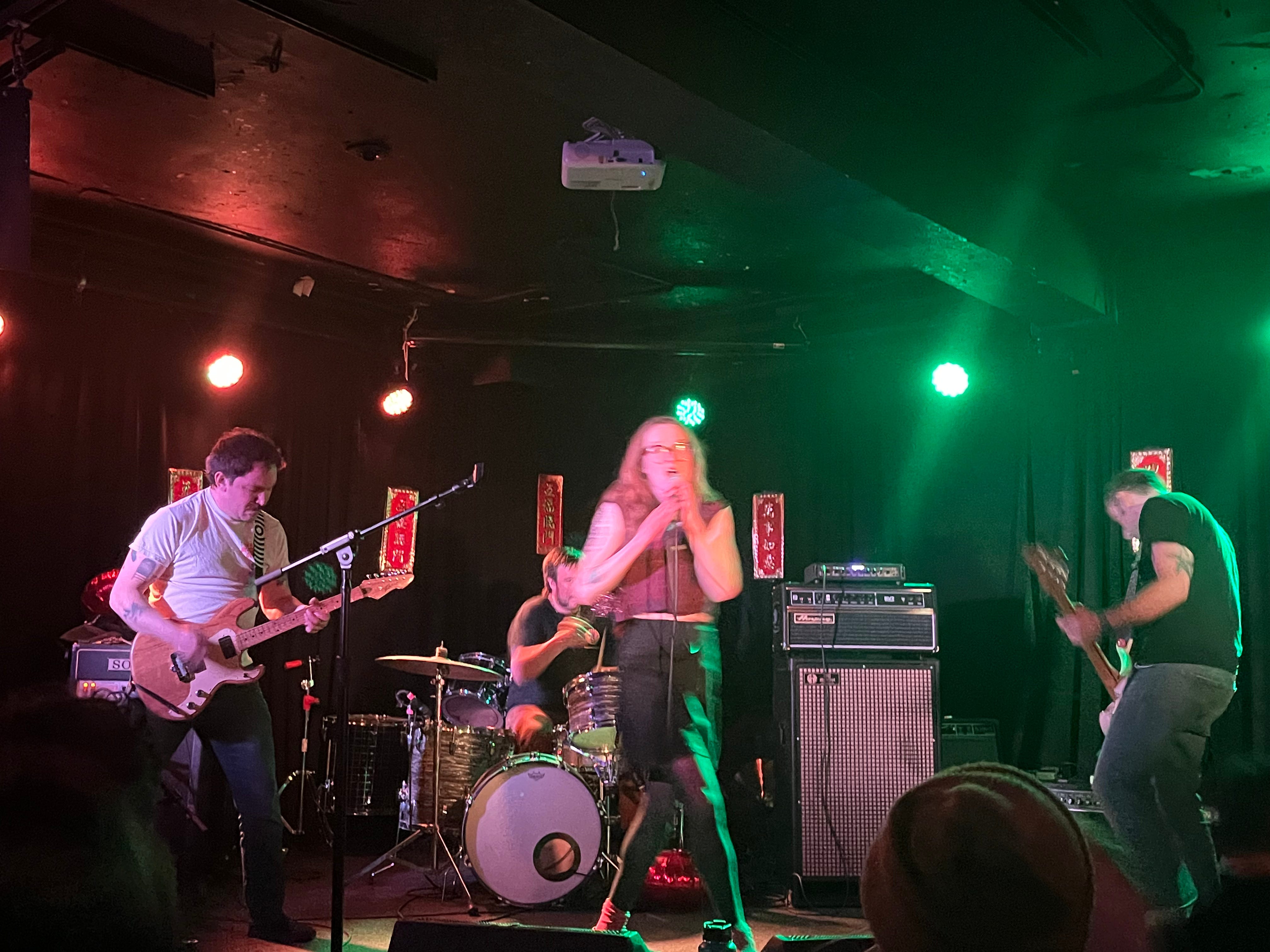
Thurston Moore’s most recent record is a pretty self-explanatory affair: these pieces are all sketches made in prep of a work conceptualized by his current wife for the New Music Dublin Festival. It’s a bit cliche to describe noisy guitar by referencing clouds, and my days of being a weather nerd are past me such that I can’t really ascertain whether the cloud types referenced in the track names are all appropriate, but it’s still a solid record with variety from noise-ambient to demo sketches within.
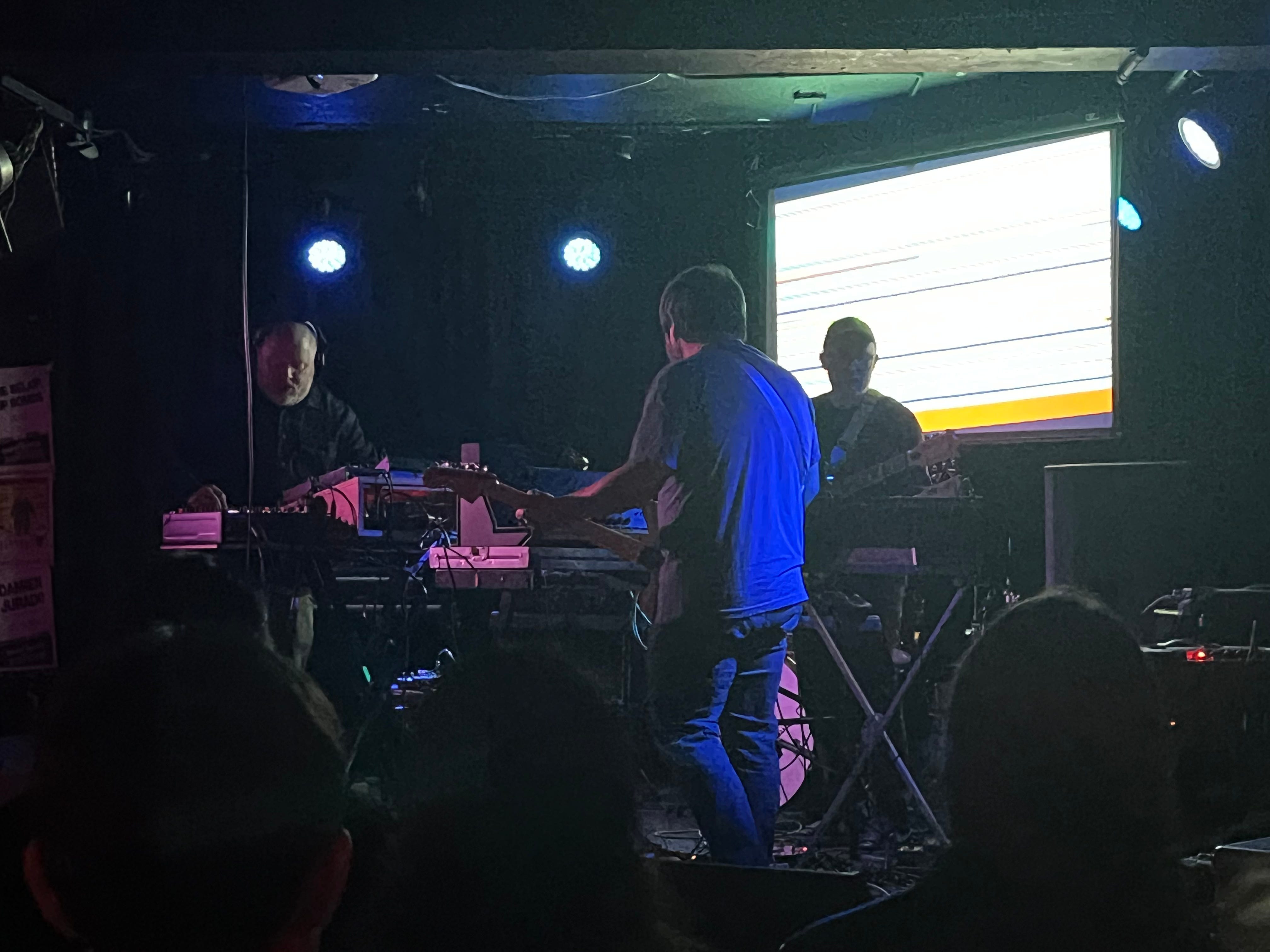
Munich’s Sam Goku dropped the third in his series of Explorations records, and it’s a doozy. If you use the word dub when describing dance music, you can almost instinctually add in techno after, but these tracks lean way more towards the house side of things. They’re still deep and groovy affairs with plenty of delays applied, and give you plenty of thought into what might be if dub house were as big as its sibling. At least we have these to rinse for days.

Montreal’s Private Lives probably won’t win any innovation awards for this record—even I know these exact chords have been used endlessly before. Still, the energy is infectious, and the throwback progressions to old-school punk or even older-school rock ’n’ roll make the case for grabbing the 45. A welcome shot of energy to jolt you out of your stupor as needed.
And finally, I came across this little record on Bandcamp recently and quite enjoyed it. Perhaps you will too! Quite the hidden gem to add to your collection.
Ok, ~2,000 words down so I’m satisfied calling that issue #97 of Crow’s Nest. In the world we’re in right now, I want to thank you for spending the time reading this, listening, considering, pondering, examining the contents within or whatever you do with this. Until next time, do your best to stay sane out there.